Site Meter

Paul's Thinking Place

Wednesday, January 06, 2016

2015 Book Reviews Pt. 3

I didn't do a reading review in 2014, primarily because of time, and I wasn't blogging much in Dec. 2014/Jan. 2015. This time, I'm reallyi trying to blog at least once a week. So, I'm dividing my lists into 3 sections:

Military History
Spiritual
Brain Candy

Most of my reviews are a few sentences in length, but, as you might expect since I didn't blog much at the beginning of 2015, either, my reviews for books I read during that time are rather short, too. In addition, these reviews (brain candy) were short because the books were so light, there wasn't much to review. They were either fun or not.

So, without further ado, here's today's reviews of Brain Candy.

1)Tom Swift and the Cosmic Astronauts (by Victor Appleton II). Serious brain candy. *

2)The Westing Game (by ??) - A murder mystery of sorts that I read to Benjamin.
*.5

3)Hardy Boys: The Clue of the Broken Blade - * simply because it's the Hardy Boys. I read this one to Matthew.

4)The Hawk That Dare Not Hunt By Day (by Scott O'Dell) - Historical Fiction regarding the story of William Tyndale. Read it to Benjamin. Good story, and brought some good discussion with him.

5)Secret Agent on Flight 101 - Hardy Boys Book I read to Matthew.
*

6)Dawn of the Jedi: Into the Void (by ) - This was good brain candy, and a good book in the Star Wars Universe. As the title implies, this occurs centuries before Anakin was born, even before hyperdrives were invented. Good story. *

7)As You Wish (by Cary Elwes)- A great memoir of the making of Princess Bride, with a little bit of Cary's (Westle's) biography and the history of the book thrown in for good measure. This is a fun and funny book, with some poignant parts, as well. It's more than brain candy, yet not deep. It's difficult to put into any one genre - much like Cary says everybody struggled to categorize the movie - so difficult to rate, but I think I'll give this
*.5. It's not quite good enough for 4 stars, but close.

8)Law of the Desert Born (by Louis L'Amour) - A collection of short westerns. Good brain candy. .5

9)Sackett's Land (by Louis L'Amour) - The beginning of the Sackett Saga. Good start. I enjoy this author tremendously. Hearing stories about the women he portrays makes me appreciate my wife all the more, as she's got similar characteristics of the women L'Amour portrays: Willing to go on adventures with the man she loves; willing to do hard things; loves the outdoors. Yeah, I'm glad she's my wife.
*

10)To The Far Blue Mountains (by Louis L'Amour) - Book number 2 of the Sackett Saga. Continuation of Barnabas Sackett's story, and how he finally died a warrior. *

11)The Warrior's Path (by Louis L'Amour) - Book number 3 of the Sackett Saga. This book follows - primarily - Kin-Ring Sackett, Barnabas' first-born, with a little more about Yance, son #2, as they break up a group of female slavers.
*
posted from Bloggeroid

Labels: , ,

Tuesday, January 05, 2016

Book Reviews from 2015: Pt. 2

I didn't do a reading review in 2014, primarily because of time, and I wasn't blogging much in Dec. 2014/Jan. 2015. This time, I'm reallyi trying to blog at least once a week. So, I'm dividing my lists into 3 sections:

Military History
Spiritual/Leadership Growth
Brain Candy

Most of my reviews are a few sentences in length, but, as you might expect since I didn't blog much at the beginning of 2015, either, my reviews for books I read during that time are rather short, too.

So, without further ado, here's today's reviews of Spiritual/Leadership Growth.

1)Fresh Wind, Fresh Fire (by Jim Cymbala & Dean Merrill) - Putting the Holy Spirit, Prayer, and doing things God's way first in your life and the life of the church. This is my first of several repeat reads. Pastor Cymbala somehow (God's Spirit?!) is able to speak to things with power and authority that we need to hear. *

2)The Way of the Wild Heart (by John Eldredge) - Excellent book about what it means to become a man of God. This is an extension of his first book, Wild At Heart. *

3)The Mission, The Men, and Me (by Pete Blaber) - While it's selling point was the subtitle, "Lessons From A Former Delta Force Commander," implying it was another book about US Special Operations, this book is really a leadership book. There are some great lessons learned from the stories Mr. Blaber tells, beginning way back in the 90's through the winter of 2002 in Afghanistan, and Operation Anaconda. The lessons are excellent, though I think I took more away from "The Trident." There is significantly less profanity than most military books, showing more professionalism in writing, in my opinion. I give this book , but I don't think I'll be putting this on my "To buy" list. It's lacking the emotional connection that "The Trident" had. It's a 4-star book, but a different kind of 4-star.

4)They Smell Like Sheep (by Dr. Lynn Anderson) - A fantastic book on pastoring. This is my second time reading this book, and well worth a second look... or even a third. .5

5)Under the Unpredictable Plant (by Eugene Peterson) - One of my favorite books on pastoring, this is a Pastor Peterson's look at what pastors can learn from Jonah. Great lessons here. I found myself learning things, and relearning things. Again, another repeat read, but worth it. .5

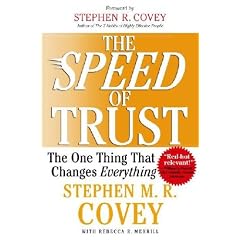
6)The Speed of Trust (by Stephen M.R. Covey) - This is a phenomenal book! It rocked my world, making me realize - or maybe admit would be a better word - how imperfect is - how much work I've still got to do on - my integrity as a man of God. However, he doesn't stop there. He makes the case for why trust and integrity are actually important to business and other types of relationships - beyond the obvious fact that friendships are based on trust; a case for the idea that trust is actually a measurable commodity; how to build up trust from a starting point, and what to do if trust is broken - by the reader, or against the reader. It's an excellent book, though really only useful if one is willing to be honest with one's self. I was, and it struck me right between the eyes in terms of where I still need God to transform my heart and the way I love others. *

7)The Signature of Jesus (By Brennan Manning) - Brennan once again does an excellent job of communicating the grace of God, while calling us to worship Him with our lives rather than just our words. Probably my biggest take-away, though not my only one by far, was to keep my focus on Christ - in worship, prayer, trust... Everything. A good, convicting book that I've read a second time now.

posted from Bloggeroid

Labels: , , ,

Monday, January 04, 2016

2015 Reading & Reviews

I didn't do a reading review in 2014, primarily because of time, and I wasn't blogging much in Dec. 2014/Jan. 2015. This time, I'm really trying to blog at least once a week. So, I'm dividing my lists into 3 sections:

Military History
Spiritual
Brain Candy

Most of my reviews are a few sentences in length, but, as you might expect since I didn't blog much at the beginning of 2015, either, my reviews for books I read during that time are rather short, too.

So, without further ado, here's today's reviews of Military History.

1)Fearless (by Eric Blehm) - Story of Navy SEAL Adam Brown, from childhood to dark, college-aged period of trying to find purpose to time as Navy SEAL, and the impact for Christ of his life on those around him. (Read this one twice in order to read it to Matthew, and a little to Ben.) *

2)The Only Thing Worth Dying For (by Eric Blehm) - Story of a Green Beret unit (12-man team) who helped put Karzai in power within three months of 9/11/2001. A good story and history lesson. *

3)Killing Lions (by John & Sam Eldridge) - What does it look like to transfer from boyhood to manhood, ideally in your 20's, but for men of all ages, especially those whose fathers weren't there - or didn't know how - to help them become a many. (Read this one multiple times - with Michael and Mark, as well as David Poland) *

4)Into the Fire (by Dakota Meyer & Bing West) - Autobiographical story of the first living Marine in 30 years to receive the Medal of Honor, and the battle in Afghanistan he survived in order to receive it. .5

5)The Trident (by Jason Redman & John Browning) - Autobiographical leadership story of Jason Redman's journey - becoming a SEAL officer, being broken because of his pride and lack of teachability, being rebuilt through humility and learning to be teachable (even by those "below" him), and then his recovery from wounds that almost kill him. This is not about how he became a SEAL, or his life before becoming one, though those things are touched on.

6)The Outlaw Platoon (by Sean Parnell & John Bruning) - The story of a year in Afghanistan with 3rd Platoon of the 10th Mt. Division, as told by the Lt. who lead them during that year. *

7)The Lions of Kandahar: The Story of a Fight Against All Odds (by Major Rusty Bradley and Kevin Maurer) - A great read about a major battle in Afghanistan to defend Kandahar four years after "The Only Thing Worth Dying For." At the time Major Bradley was the Captain of one of the ODA's of the Green Berets who were assigned to assist Canadian Forces in clearing out the Taliban. Instead they ended up playing a major role in the operation, and, along with U.S. air power, ended up saving the mission. *

8)Code Name: Johnny Walker (by "Johnny Walker"and Jim DeFelice) - A well written memoir about growing up in Iraq under Saddam Hussein, getting an education and getting married, then becoming an interpreter for the Navy SEALS. Not only does he cover the pain and difficulty of working for the Americans in an increasingly anti-American country, but he also covers the difficulties (physically and emotionally) of being an interpreter for the SEALS and watching his country implode. He sticks with his code name to protect family and friends still in Iraq. A good book to get a better idea of an average (I'll call him a "jack-Muslim") muslim's perspective of the Iraq war. Definitely more swearing than I think was necessary, even for a military book (most books read above had considerably less). .5

9)Battle Ready: Memoir of a Warrior Medic (by Mark L. Donald & Scott Mactavish) - Excellent memoir about growing up and becoming not just a Navy SEAL, or just a Corpsman, but a long list of different roles: Marine Recon, then Navy SEAL, then Hospital Corps for the SEALs, then a Physician's Assistant performing as a corpsman, and many other roles, too numerous to mention here. The most important part of the book though - the reason he wrote it - is he learned an important lesson through all of those years, one that cost him much, and one he wants to pass on to others so they don't have to pay a similar price... or worse. He learned the importance of asking for help, whether it's PTSD, or something simple. And who he learned it from is just as important. This is a great book for both military and civilians. *.5

10)Brothers Forever (by Tom Silko & Colonel Tom Manion) - Story of two Naval Acad. roommates and grads, the best of friends, who lost their lives in the war on terror. 2Lt. Travis Manion was a Marine officer, while Lt. Brendan Looney was a Navy SEAL. Their story is an amazing one of friendship and a desire to serve their country, even if the other died first. A well written, encouraging story to forge ahead, set a good example, and not to give up. *

11)No Way Out: A Story of Valor in the Mountains of Afghanistan (by Mitch Weiss and Kevin Maurer) - Story of a Special Forces operation in Afghanistan that went horribly wrong, and the heroic actions taken by the teams to bring everyone home. The goal was to capture or take out a senior Al Qaeda leader... by attacking in the daylight, letting them know we were coming (by sending helicopters ahead to find a path through bad weather), attacking up hill, and trying to invade a well-defended, walled compound. To add insult to injury, not only was the intelligence awful/completely wrong (intelligence said there was no water, yet satellite pics showed an obvious river flowing through), but everybody from the Capt. down try to talk the commanding officers out of the plan, and they were ignored. While the story was sad and frustrating to read, it was very well written. I didn't like the ending, not because it was poorly done, but because there's no record of anybody being disciplined, or even corrected for the arrogant operation that was obviously more about padding some upper-level commander's resume then about doing what's best for America or Afghanistan. Still, it was a great story and lesson in planning operations, as well as the stories of some great soldiers that may not have died, but gave their lives in other ways. I give it *.5

12)Guardian Angels (by William Sine) - Tells the story of Mr. Sine's experience, as well as many other para-rescue men of the Air Force. The stories are good, but the editing is very poor, with instances of poor english and words being our of order in every chapter. In addition, Mr. Sine glorifies many of his immoral and reckless behaviors, as well as the occasional disobeying of an order or two. Most, if not all, other similar books I've read, there have been instances of similar stories, but they've either downplayed them, or they've actually admitted that what they did was wrong, and shouldn't have been done. I really didn't like this book. *.5

13)That Others May Live (by Jack Brehm & Pete Nelson) - True story of Jack's life as a PJ. Much better that Guardian Angels. I'm disappointed that it ended before much of Iraq & Afghanistan, but it still had some great stories, including the story behind the rescue in "The Perfect Storm." What made it better was it rarely felt like Mr. Brehm was trying to make himself look good. He also espoused the importance of taking care of his wife. Good story. *

14)Top Dog: The Story of Marine Hero Lucca (by Maria Goodavage) - Great story of an explosives sniffing dog who saved hundreds of lives, and lost his leg saving more. While I'm not ready to start offering medals to dogs, I am ready to start treating them as more than another piece of equipment, which is what the current military rules demand. Thankfully, steps have been made, and now dogs are taken care of like their human counterparts (medivac, trained veterinarians in country, etc.) in every way except how they retire. Good book. Made me cry a couple times. *.5

15)None Braver: U.S. Air Force Pararescuemen in the War On Terror (by Michael Hirsh) Great book that does a good job of telling a wide variety of stories about the different jobs of PJ's. Doesn't go into too much detail about any particular PJ; it's more about the wide variety of missions, and how PJ's put their lives on the line to rescue folks. Good book. *

16)Roughneck Nine-One: The Extra-ordinary Story of a Special Forces A-Team at War (by Frank Antenori) - I enjoyed this book for the most part. The author did a good job of taking the reader into the lives of the men and the mission. It's the story of one particular mission that helped turn the page in what Green Berets can do in modern warfare. I suspect it was a lot scarier and more dangerous than the tone of the author suggests. *.5

17)Ashley's War (by Gayle Tzemach Lemmon) - The story of the first women to join - unofficially, of course - special operation teams. This story is primarily of the women who worked with Army Rangers, since the women were Army, but they served with all Special Ops. Their purpose: To assist in questioning, searching, and protecting Afghan women. Ashley had the sad honor of being the first woman to be killed in this "enabling unit" (that what the army terms those people who aren't officially special operations, but they assist the special ops teams in doing their jobs, so they're almost part of the teams - bomb disposal, dog handlers, etc.). This was a good book about an interesting topic that I hadn't heard of before.*.5

18)The Reaper: Autobiography of One of the Deadliest Special Ops Snipers (by Nicholas Irving and Gary Brozek) - A few good stories about the difficulties of war, but generally an average book. *

19)Seal of Honor (by Gary Williams) - Another version of the story of Operation Red Wings, but this time focusing on the biography of Lt. Michael Murphy, who not only led the operation, but was the officer who made the cell call for help that cost him his life. He later received the Medal of Honor (posthumously). The book ends with some of the other ways he was honored, and how his parents keep his memory alive. This was a good read about an honorable man. It was well written and researched, and honored Lt. Murphy well. *.5

20)Back In The Fight (by Sgt. 1st Class Joseph Kapacziewski and Charles Sasser) - The story of the first Special Op soldier (an Army Ranger, in this case) who went back into combat as an amputee, having lost his leg from a grenade during a tour in Northern Iraq. This is a great story. It's inspiring, not only for what Sgt. Kap did to get back into service, but also for the story of how he became a Ranger, things he did as a Ranger (before and after his amputation), and, best of all, the love story between him and his wife, Kim. Nothing deep or profound here, but a great story. *.5

21)Gentlemen Bastards (by Kevin Maurer) - The story of a specific Green Beret ODA in Afghanistan, as told by an embedded writer. The title of the book is the team's nick name. The author does a good job of communicating two things: The difficulties of trying to help the Afghan people create a cohesive government, specifically creating policemen, and 2)Just how boring war can be amidst all the difficulties, especially for a Special Forces unit whose focus isn't fighting but is training police units (even federal police units) how to find, fight, and/or capture bad guys. Still, though it was well written and informative, I didn't find it as interesting as other Special Forces books. I think that's in part because there wasn't a human element. He talked more about assignments, what he experienced, and the like rather than developing the human element of either the trainers or the trainees. I also found it unnecessary the amount of profanity he used, even for a military book. Overall, I'd give it **.5

22)Green Berets (by Robin Moore) - I don't usually review a book I don't finish (there have been a few this year), but I'm making an exception because I was so frustrated with this book. There were so many good things about it, I can fully understand why John Wayne made a movie from it. Yet, it was so ridiculously sexual, that I finally gave up because of the sinfulness (and downright just disgustingness) of the sexuality discussed. It may have been reality, and it may have had great stories to tell, but the sexuality issues kept me from enjoying it... or finishing it. *.5

23)Inside Delta Force (By Msg. Eric Haney) - This is an average book about an amazing Special Forces Group. It's well written, but nothing that strikes me as special itself. It's also been surrounded by controversy, as many former Delta Force soldiers have accused the author of exaggeration, sharing too much information, or out-right lying. While I'm certainly not the one to tell whether it's accurate or not, the controversy does cast a bit of a shadow over the book. I enjoyed the read, but it's not something I'd read again. .5

24)Delta Force (by Charlie Beckwith and Donald Knox (c) 1983) (Updated Epilogue by C.A. Mobley in 2000) - If one is looking to learn some military history about Delta Force and their part in the Iran Hostage Crisis of 1979-80, this is a great book to read. Col. Beckwith does a great job of sharing how Delta Force (anti-terrorism Special Operations unit) came to be, from the concept/idea received from a year spent with British SAS forces in 1962 to implementing the principles on a small scale with Special Forces in Vietnam, all the way to how they trained and prepped for the rescue mission in Iran... and why it went bad. Informative without being dry; not entertaining in a trite way, but enjoyable none-the-less. *.5
Sent from my iPad
posted from Bloggeroid

Labels: , ,

Thursday, November 19, 2015

More reading, etc.

In addition to the other books I've mentioned recently, I'm reading for the second time, The Speed of Trust by Stephen M. R. Covey. This is an amazing book on being a man (in my case), person, or business of integrity. It's not as simple or as small as one might imagine.

I've had several ,"Aha!" moments in this book, as well as, "Wow! I've got a lot of work to do in this or that arena" moments. Since I'm more than three-quarters of the way through at this point, and just now starting to blog again, I'll just start where I am with this quote that Covey quotes.

Listening is not an activity you can delegate - no matter who you are." ~ Feargal Quinn, CEO, Superquinn (grocery chain and shopping malll operator in Ireland)

In other news...

My #3 child is getting big, and my body's starting to feel it.  Last night he just about took me out by launching a surprise attack from behind while I was kneeling and fighting his younger brother. By the time I went to bed, my shoulder was really hurting, and the chiropractic adjustment I'd had that afternoon was completely shot. We're going to have a discussion about how to wrestle with dad. Attack and run won't cut it, buddy. :)

- Posted using BlogPress from my iPad

Labels: , , ,

Thursday, July 24, 2014

Book Reviews: Biographies

This is my fourth and last post of books I've read during the first half of 2014. For my other reviews, the reader can follow these links:

Fiction (the reader will find my philosophy of my reviews, too)
Leadership/Pastoring
Theology

Towards the end of 2013 I heard about the movie, "Lone Survivor," and that it was based on the book of the same name. The movie sounded great, so I checked the book out of the library (I try and read books first when I can in these situations) and read it. That started me on a road of reading books about Navy SEALs. I don't know why, but it's what I've been reading of late. So, here are my thoughts on the books I've been reading along these lines.

The Lone Survivor by Marcus Luttrell, with Patrick Robinson: This was an amazing book about the ill-fated "Operation Redwing," and the lost members of SEAL Team 10 in Afghanistan, as told by the eye-witness, Marcus Luttrell. However, before jumping into the actual operation, Marcus explains both how he became a SEAL (from his teen days getting his body ready for it), and a little history of the situation in Afghanistan that they were jumping into. Marcus then tells the story of the actual operation, with all it's gore, sadness, loyalty, and heroics. He talks about each member who participated, as well what was going on at home when the news hit the U.S. He talks about his faith in God, his love for the U.S., and his love for Texas. Anybody who has friends from Texas would understand if I said that his love for Texas often seemed greater than his love for anything but his family, but the rest of us will excuse that. He then tells the aftermath of the story - what happened after everyone returned to the U.S., and the process of recovery. While this story is entertaining, it's anything but light. The reader gets a much better idea of what makes a Navy SEAL, but, more importantly, what a Navy SEAL is made of. The lessons about loyalty, perseverance, friendship, making and attaining personal goals, and honoring your word are priceless. A word of warning, though: This book has some pretty strong language/profanity. It's not something surprising to those who know military men (There's a reason for the phrase, "He swore like a sailor."), but it can be a put-off for some. So, I'll give this book a 4/5 stars.

American Sniper by Chris Kyle, with Scott McEwen and Jim Defelice: This is the autobiography of "the most lethal sniper in U.S. military history," based on eye-witness reports of confirmed kills. This is another SEAL story, but not as good, in my opinion, as "The Lone Survivor." The story is good, but I don't feel it was told as well as Luttrell's. Interestingly enough, though the story ends well in the book, I was actually sadder with this book than with Lone Survivor. The primary reason for this was the emptiness and difficulty Kyle had knowing how to love his family. I don't think it was for a lack of trying, so much as it was a lack of know-how, a lack of a working relationship with God, and a lack of people coming alongside him to help him do it well. I especially am disappointed in Kyle's version of how our Navy leadership failed him, but I guess, to some degree, that's to be expected. Their job isn't to make a family work, but to defend our nation, and family is simply another sacrifice needed to make that happen. Hmmm... a blog post I'm not sure I'm qualified to write about, having not been in the military. Anyway, the positives of the book are the details Kyle gives of all his different operations, and his great perspective of not only what it means to be a SEAL (different than Luttrell's in my opinion), but also the Iraq and Afghan wars, and the different individual operations he was a part of. Overall, though, I think I came away disappointed in the book. I'm not sure I can put a finger on why, other than I think I expected more character from Kyle, or maybe a happier ending about how he loved his wife and kids. He certainly tried, leaving the Navy in order to be home with them. He also did a great job out of the Navy, creating a sustainable business, and being a part of many non-profits that care for "wounded warriors." Yet he struggled with blaming his wife for having to leave his "first love," rather than making her his first love in the first place. Or maybe I'm disappointed because I know the ending isn't happy. Shortly after the book was published, Kyle and a friend were gunned down at a shooting range by a man they were trying to help overcome PTSD. Whatever the reason, I left the book unsatisfied with it. I give it a 2/5 stars. For those wanting an idea of what it's like to be a SEAL, I strongly recommend "The Lone Survivor."

Service: A Navy SEAL at War by Marcus Luttrell: This is really just a sequel to "The Lone Survivor." It follows Marcus as he gets back into the fight in Iraq, moves up in rank, and learns more about what it means to lead... even when that leadership means making the tough call (with help from his commanding officer) that he's too broken up to lead in the field anymore. However, Marcus makes a point of not only talking about his role, but he also honors many other men from all branches of the military that he meets in Iraq. The reader also learns a bit more about Marcus' rescue and the details of getting the bodies back of his comrades. Once again, this is an excellent book. Marcus has obviously learned more about how to write, as it's even better than his last book (which was a bit rushed so he could get back into the field, we find out in this one). The stories are great, and he generally stays away from politicizing things. Finally, the reader learns about his new found wife as Marcus leaves the Navy and moves into civilian life. We also learn about his brother, and what his brother is doing now (at least through 2012). It's a great book, all around, and I give it 4 out of 5 stars.

- Posted using BlogPress from my iPad

Labels: ,

Sunday, July 20, 2014

Book Reviews: Theology

This is my third post of book reviews from the first half of 2014. Now that I'm into this series, I realize that this section is rather sparse. I've only read one book of theology this year (other than the Bible, of course, which the reader has had the opportunity to keep up on in other posts). Still, I couldn't think of how to put it in any my other sections, so this is it. For my former reviews from this year, as well as my review philosophy/system, the reader can see fiction and leadership/pastoring.

God Built by Steve Farrar: This book is ostensibly a study of the life of Joseph (found in Genesis 37-50). However, the author really uses this story to make the case for the sovereignty of God, which is more the theme of the book. Pastor Farrar shares some great lessons from Joseph's life about trusting God when everything looks hopeless, or obeying God, even when the outcome seems like the bad guys are winning. I was tremendously encouraged by these lessons. However, there were two things I felt the author did poorly: He didn't balance God's sovereignty with man's free will, and, by about halfway through the book, he had made his case, and was simply saying the same thing a different way. The latter issue is simply trying to fill a book, and many authors do it. That doesn't make it okay, but at least I understand why an author would want to drive his point home that way. I learned in high school english to make my point, then quit talking. I don't always do it well, either, but it does bug me when I get a book, and I spend half of it reading the same things over and over again with different stories. Regarding the former issue: I am convinced that God is sovereign. However, I am also convinced that somehow, in His sovereignty, God gives man complete free will. It felt like Pastor Farrar was really pushing the stereotype that God is a chess master playing both sides of the board, then he would make a case for man choosing to sin (or not), then totally say it's God who makes those things happen. I think Pastor Farrar and I would both agree that there's a paradox regarding freewill and sovereignty; I think we just come to different conclusions regarding what it is. For theology and writing style, I give this book a 2.5/5 stars. For the reminder of truths I did need to hear, though (my review, I can be contradictory if I want), I praise God for the 5/5 stars that I needed and was encouraged by.


- Posted using BlogPress from my iPad

Labels: ,

Tuesday, July 15, 2014

Book Reviews: Leadership/Pastoring

This is the second in my series of blog posts on books I've read so far in 2014. My review system, as well as my reviews of the fiction books I've read (mostly for my boys, now that I look at it) can be found here. Here are my thoughts on the leadership/pastoring books I've read so far this year.

Leading Up by Joel Mayward: This is a leadership fable (or parable) in the style of Patrick Lencioni's stories. However, though the principles could be used in a secular position, it's primarily written for (and about) a church situation. The point of the story is teaching the principles of how to influence leadership over you in a humble, Godly way, what the author calls, "leading up." He lists five needs, and one strong recommendation for the person who wants to lead up. The story does a good job of showing the process and principles, though not quite to the excellence of Lencioni (in my opinion). Then the last third of the book has the explanation and break down of how it works. These principles (needs and recommendations) are excellent, and very well explained. I give this book a 4/5 stars for quality and for impact, as I continue to be challenged by the thoughts from the book. I would encourage the reader to follow this book with the podcasts by Andy Stanley called, "How To Lead When You're Not In Charge" from May and June of 2014.

Letters To A Young Pastor by Calvin Miller: This was a good book of just what it sounds like - letters from Calvin Miller to pastors on how to shepherd people well. He covers such topics as being culturally relevant while staying Biblically true, your personal walk with Jesus, writing a sermon, and simply how to work with/deal with/care for people in the congregation (easy and difficult). I loved his balance between dealing with real feelings of frustration, anger, and even fear, and allowing Christ's grace to flow through us anyway. His personal stories (and their were many) were encouraging and helped keep the book interesting, while also making his point. It also gave me, as a younger pastor, permission to make mistakes and survive rather than fear trying new things, or pursuing difficult things (like relationships). The one thing I continue to wrestle with is what does it look like to equip the saints while shepherding the sheep. I think he wrestles with this as well, but tends to lean strongly towards more about shepherding rather than equipping the saints to do his work... and His work. It's not a life changer in how I do ministry, but it was good. I'll give it a 3/5 stars.


- Posted using BlogPress from my iPad

Labels: ,

Friday, July 11, 2014

Book Reviews: Fiction

I'm halfway through 2014, and I've read eleven books so far. Rather than invite the reader to read 22 or more reviews in January of 2015, I thought I'd post my reviews at the halfway point for easier reading.

Over the past year, as I've finished books, I have written my thoughts down so they're fresh in my mind. I've given each book a rating based on a 5 star system (because stars are easy to think about, and I don't have a last name that's conducive to something cute or fancy). One Star: Lousy, don't bother; Two Star: Not worth spending money, but okay if you can get it for free. You'll get something out of it; Three Star: Average book. I liked it, and it's worth a buy, but it wasn't stellar, and not something I'd say is a must have. Four Star: Impacted my life in some way (even for entertainment value), and would say the reader should probably purchase it if given the chance; Five Star: Near perfect book, and highly impacting, i.e. completely transformed some area of my life. Would suggest that the reader should purchase this at the first opportunity and read it right away. Some of them I've rated for impact, some for content, and some for readability. Some I've even rated for a couple of things. And the reality is that my ratings aren't perfect, and are strictly my opinion. I'm not even sure my wife would agree with me. But, then, again, it's my review. Since the reviews are already written, I'm just going to copy and paste, and see how that works.

I'll break this up into fiction, leadership/pastoring, biography, and theology. So, let's start with fiction, and go from there. As you go, you'll see why I decided to go ahead and break these up into multiple posts, and do this batch now, and the second half of 2014 in January, 2015.

The Curate's Awakening by George MacDonald: Set in a 19th century English country village, this is the story of a newly minted, young curate - the only equivalent I can come up with is the difference between a licensed pastor and an ordained one, the curate being the former - Thomas Wingfold, who discovers that he really doesn't believe what he's preaching, and he's too honest a man to not care. The story chronicles the next year as Wingfold, within the bounds of his parish duties, takes a faith journey to discover whether he is really going to believe (and therefore keep his job), or set aside both his job and the Bible. Parallel to this story is the story of Helen Lingard, a young lady in Wingfold's parish, who takes an entirely different journey of faith, starting further away, and continuing to move further away from truth, as she is wooed by a confirmed atheist lawyer, and nurses her sick brother, a murderer in hiding. Yet for all these two stories, the full story itself isn't an action-adventure story or mystery, but more a drama of real life doubts and fears, and what the two primary characters, and even the secondary ones, do with those doubts and fears. That said, the story is but the vehicle for the author to communicate his love of the church, and God's tremendous love and grace for us. There are some amazing nuggets of truth hidden in the dialogues of this story. There aren't too many works of fiction in which I underline quotes, and even fewer that I highlight whole paragraphs, but this is one of them. This is the third time I've read this book, and I continue to be challenged to a simpler, yet stronger and deeper faith in God, and a deeper walk with Him. While I would give this book a 4.5/5 stars for continued impact, it is a slow read, especially if one is used to our cultures constant need for action-type drama rather than the type that makes one think. For that reason, I think I'd give it a 3.5/5 for readability, which may not be fair to the author, basing my score on our culture's values, but I want the reader of this review to be prepared for the type of book he or she would be diving in to.

The Ladies' Confession by George MacDonald: A sequel to "The Curate's Awakening," (and part of a trilogy 'starring' the curate, Thomas Wingfold), the title indicates that the book is about Juliet, a young lady whose past we never really learn a whole lot about, other than the important piece having to do with the confession. The story really has to do with the question, "Why does a good person need Jesus?" and centers around Dr. Faber, Juliet's doctor, and eventually her husband. MacDonald does an excellent job of addressing this question through Dr. Faber, as well as a few other more minor characters, expertly woven through the story without making them feel forced. Despite MacDonald's focus for the story, the lesson I learned was one of grace and patience. I was reminded of the truth that a person's story is never over as long as they live; that God is always working on people through their circumstances, as well as the power and drawing of His Holy Spirit. My role is to be patient, as well as follow the nudging of the Holy Spirit to speak truth into their lives as God gives me opportunity. This speaking probably won't be in "preaching at" them, but will more likely be in words of encouragement, loving them with His grace when they know they don't deserve it (and even if they don't), and especially in asking questions. Through it all, it's about having patience and trusting God for their soul rather than feeling like it's all on me, or they're hopeless. This is the second time I've read this book, and, despite the great lessons here, for readability and enjoyment, and even impact, I'd only give it a 2.5/5 stars. It simply didn't hold my attention like the first book in this series did. That makes it an average book, which isn't a bad thing, but not something I'd highly recommend unless the reader is the type that is able to think while they read rather than just turn their brain off.

The Baker Street Mystery Series by Thomas Brace Haughey: This is a mystery series that I actually began reading to Matthew in 2013. It's made up of six books, and tells the stories of Geoffrey Weston, a great-grand nephew of Sherlock Holmes, and his Watson-like partner, John Taylor, Esq., who tells the stories. The stories are: The Case of the Hijacked Moon, The Case of the Invisible Thief, The Kidnapped Shadow (taking place in Mexcio), the Frozen Scream, The Case of the Maltese Treasure, and The Case of the Unbolted Lightening (which takes place in the United States). Like Sherlock, Weston is not only brilliant and well-read, but is also great at making deductions, and secretive in disclosing his deductions until he's got all his ducks in a row and is ready to make the arrest. The stories take place in modern England (or at least start there), though modern is relative - they were written before cell phones were invented. The twist to these stories is that the detectives are solid Christians. Because of the nature of their jobs, it's completely logical (pardon the pun) that they primarily share the Gospel through argument/debate and apologetics. This was an especially popular way of sharing the Gospel in the 80's, so it fits the time frame that the author was writing in. Whether they're interviewing a witness or a suspect, or they're just visiting their friend from Scotland Yard, they're always looking for an opening to talk about how God can transform your life. Overall, these books are great brain candy - they're not deep (despite the efforts of the author to create some great apologetic arguments), the stories are fun, and not completely obvious. For entertainment value, I'd definitely give them a 3/5 stars, though Matthew may have enjoyed them more than that.

The Tower of Geburah by John White: I don't know how many times I've read this book, or had it read to me. My mom discovered the book when we were kids, and read it to us. It's a great read, very similar to Narnia, yet definitely with its differences. My wife and I have now read it to our boys (at least the three youngest), and we not only appreciated the story (as did the boys, who clamored for me to read it every change we got), but we also appreciated the lessons the author interwove through the story. To our eyes/ears, they were pretty basic and obvious, yet to children, or those who haven't been Christians long, they're quite subtle. The story opens up great dialogue with our kids for examples of what it means to live for Christ in a way that our boys are open to. My boys would probably give it a 4.5 out of 5, so I'll stick with that, as those are the ones it's written for, and I'm very thankful for the lesson opportunities it has and will give Shari and I. We look forward to reading more in the seris as the library acquires and sends them to us.


- Posted using BlogPress from my iPad

Labels: ,

Tuesday, December 27, 2011

Book Thoughts: "Real Life Discipleship"

This post was originally written on Dec. 23. However, I wasn't able to get it posted until today because I didn't actually write it in Blogger, but on another program that didn't transfer easily. Hence, some of the thoughts may seem a little dated now that it's after Christmas.

*****************************************

A little background: As the small group director with Shari, part of my job is to not only research small group material, but also to stay on top of small group training, as well as make sure I'm continually teaching or reteaching myself. So, with that in mind, Pastor Doug suggested that I pick up, "Real Life Discipleship," along with it's corresponding workbook, by Jim Putman of Real Life Ministries in Post Falls, ID.

I'm only on chapter 4, but there have already been many quotes, thoughts, and ideas that I've gleaned, been reminded of, or been encouraged by that I haven't had time to blog about... which is pretty typical for me. However, I have a moment, and I just read a great statement, and I want to share it with other readers.

Chapter 4 is about why discipleship has got to take place in the context of relationship. I couldn't agree more with this concept. As the author states, Sunday morning worship services are great times for a variety of reasons, but deep discipleship doesn't happen there regularly. Epiphanies and "Moments" happen, as well as encouragement, hearing God's voice, worship, etc., but not discipleship. Bo Boshers echos this sentiment in his book, "The Be-With Factor," as does Seth Barnes a ton of times in his blog, "Radical Living in a Comfortable World." Of course, all of these authors point back to scripture, where we see discipleship occuring so many times in the context of relationship, from Jesus and the disciples to Barnabus and Paul, and then Paul and Timothy.

My point in bringing this up is to bring up two points Pastor Jim makes in Chapter 4. The first is this, regarding how to disciple people within the context of relationship:

"... [I]n a good growth environment there is shepherding, transparency, accountability, and guided practice."

I especially like the guided practice thing. So often people seem to think that discipleship is about, at best, having people watch me so they can then do what I do, and at worst, me telling people what to do, then expecting them to just do it. Reality is that we see Jesus doing the guided practice thing several times with the disciples, including times of debriefing to help them see what they did well, and what they continue to need improvement on. A teacher can't expect a student to do it well if they only get to watch or listen. There must be times to practice and be critiqued for the best discipleship to occur.

The second quote was even better, in my opinion, though a bit longer to give the essence of it.

"I often hear people say that our church is about small groups. I disagree. We are about discipleship, and we believe it happens best in small groups. Our small groups are not designed to shut our back door or to get people into relationships. Our small groups are the conduit for real discipleship..."

The problem this addresses is so easy to slip into. It's the idea that small groups are the answer to the church's problem of keeping people in the church, or discipling them. Small groups aren't the answer to either of those problems, relationships are, and small groups are a tool to facilitate those things. Some might say it's semantics, but it's not. If you approach small groups as if they're the answer, then the focus becomes making small groups work, then it becomes make certain types of small groups work because they're a favorite type, or because they worked for certain groups of people. Instead the focus needs to be on helping people build relationships, and small groups is just one major tool to help with that.

The fact that small groups also are a great discipleship tool can lead to the same problem that must be avoided. We can't get so focused on small groups that we forget that our goal is discipleship. Small groups are just a great tool to do so.

This is a pretty light-weight book as far as thinking goes. However, they principles are very important, and I'm enjoying learning and being reminded of what is true about making disciples and our calling to do so.

Labels: ,

Tuesday, November 08, 2011

Ambition & Safety


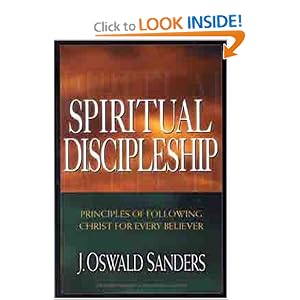
I'm currently reading "Spiritual Discipleship" by J. Oswald Sanders.  It's an excellent book, and I'm being challenged left and right by it.
Chapter 8 is titled, "The Disciple's Ambition."  Mr. Sanders asks questions such as:

•        "What is our ambition?"
•        "What is the motive for our ambition?"
•        "Is our ambition such that everything else is second to it?"
•        "Does our (my) ambition bring glory to God, or to self?"
•        "What is my response when my ambition is tested, especially by friends?"

These have all been great questions, and his "discussions" about them have been fantastic.  Here are some quotes that have caught my attention, and made me think about my own ambitions.

"It is the responsibility of the disciple to be the best he or she can be for God.  To please Him is a most worthy aim."
"No great task was ever achieved without the complete abandonment to it that a worthy ambition inspires."
"Will the fulfillment of my ambition bring glory to God and make me more useful to Him in reaching out to a lost world?"
"With all the resources of God at our disposal, we need not plead our weakness or inadequacy as an excuse for poor performance.  The least promising among us may yet be used greatly by God."

Then there's this one by John R.W. Stott, quoted here by Mr. Sanders, which was really the biggest challenge for me:
"Jesus did not remain in the social immunity of heaven, or hide away in the safety of the skies.  He entered the zone of danger, risking contamination... How can we make safety our ambition?"

All these things really make me question what I'm doing now.  What is my ambition?  I know it's not to continue being an office manager.  I know God's called me to pastor.  How am I to pursue that?  What kind of pastor am I called to be?  Youth still?  I'd love that.  Or is God moving me on to another type of pastor? When?  And, with all of these, what is "unsafe" about what I'm doing?  That is, what am I doing that is so "dangerous" that God has to come through, or I'll fall on my face.  Of course, that said, it must be something God's called me to do, or I will fall on my face anyway, but even there God will pick me up, brush me off, heal my wounds, and set me off in the right direction, never once berating or saying, "I told you so."

Other questions surface.  Is God really calling me to stay here and plant, or is this just another stop on the way to "home."  That brings up more questions about my heart, my passion, and the hearts of my family.  So many questions, and so few answers yet.  I can only turn to the One that I gave my heart to, and renew my commitment to trusting Him - That He is good, that He has my best interests at heart, and that His power is made perfect in my weaknesses... and I have plenty of them.

Labels: , , ,

Monday, July 18, 2011

Lessons from Mr. Hybels

I am currently reading two books: "Bonhoeffer: Pastor, Martyr, Prophet, Spy" by Eric Metaxas, and "Axiom" by Bill Hybels. Both of these books are excellent, but I want to mention some of the lessons I'm learning - or relearning - from "Axiom," a tremendous little book on leadership principles. It's not really a, "This is how you lead" type of book. Rather, it's a book with an axiom, then Pastor Hybels' explanation of what he means, how he practices it, and why it's important. Here are a few that have caught my eye so far, especially in the context of leading the small group ministries here at GHC. I'm not even sure this post will do justice to these, so I encourage the reader to get the book. It's a little more expensive than it should be for its size, but if you go to the Amazon site linked above, there are some really good deals for used books, which is what I got. I'm sure there are other book store sites with similar deals.

Probably the most important one for me, as Shari and I work to create our coaching team for small groups, is, "The Three C's." This is a relearn for me, as Bill also wrote about this in his actual leadership book, "Courageous Leadership." (Another one I highly recommend.) Here's the gist of it: When recruiting for a position on your team, look at these three issues, in order: Character, Competency, and Chemistry. You can't fix or train character. If they don't have it, nothing else you do will matter because they'll torpedo it pretty fast. God can fix their character, but don't put somebody in leadership until He does. Competency can be trained, but if you are endeavoring to put somebody in a leadership position, you want to find the best you can to fill that position. Don't compromise or lower your standards. Even if they need to be trained on something, are they competent learners? Finally, chemistry is still very important. If things don't click between the leader(s) and the person coming on board, there can be some real fireworks, causing some large fires that you, as a leader, will need to put out. Now, after looking at all of these, it's true that one can work around the other two, but Pastor Hybels contends, and I tend to agree with him, that working around those - not considering them important enough to find the right fit - is not only asking for conflict down the road, but maybe serious conflict, and eventually having to find another person. It's much better to hire the right person with all three C's fitting in the first place.

There's so much more, but I need to get to work. I'll post more on this later. I'm about halfway through the book. I have so much to write about Bonhoeffer, too. It's amazing how much hasn't changed; that is, there's nothing new under the sun in terms of our sin nature.

Labels: , ,

Thursday, June 30, 2011

More Books to be Read

I finished "Death by Love" by Mark Driscoll the other day. I say I finished it, but the reality is that I put it down. I simply couldn't get into it. It had some great theological lessons, but he is trying to combine deep theological lessons into a letter format to people I don't know, with stories that require some deeper coverage... I don't know, I just couldn't get into the style, even though there were some good things in it.

So, now I've moved on to "Axiom" by Bill Hybels. This is a great book, that has little bites that make me think, but the bites are small enough that I can read them in about 5-10 min. It's great.

In addition, I have a book pile that I'm trying to plow through. I'm still working on Bonhoeffer. After I finish either "Axiom" or Bonhoeffer, I have these books to read, too:

"Tools for Cultivating Your Child's Potential" by Zan Tyler. My wife's given me to the end of September to get through this one. She just finished it, and found it amazing. The last one she gave me that mandate on was, "The Last Christian," and she was right, so I'm looking forward to this one, too... though I hate it when she tells me I have to read it.

"Spiritual Discipleship" by J. Oswald Sanders. He also wrote, "Spiritual Leadership," which is a classic leadership book, so I'm looking forward to reading his thoughts on discipleship.

That's it for now, but I figure that ought to take me a few months, at least. I'm looking forward to growth and enjoyment, then Christmas, with hopefully more books coming.

Labels: , ,

Tuesday, June 14, 2011

Weekend in Review

There may be many posts like that in the future. I don't know, but this weekend certainly deserves a review. This past weekend I took leave of my family for around 24 hours and went to Windust Campground, which is run by the Army Corps of Engineers. During that time I caught up on some of the reading I posted here, humbled myself enough to ask for paper and a lighter (it's been a couple years since I went camping, and I was in a hurry when I left home), and - most importantly - I spent time seeking God as to what in the world Shari and I are supposed to do with our lives now that we're at GHC. Here are a few, succinct statements about what God spoke to me during that 24 hrs.
  1. Quit kicking myself for my disobedience. God used so many men after they disobeyed Him in a variety of ways. There is Grace. Receive it and move on. God still has work for me.
  2. God has asked me to set youth ministry down for the time being. Since He didn't say forever, I asked Him if that means I'll be able to pick it back up again some day. He very clearly said to me, "That is irrelevant for you right now. For now, your role is simply to obey me."
  3. God is calling me to serve GHC and make it better. What that looks like is going to be a constant tension between Shari and I seeking God and striving to hear His voice as to what we're to be doing, and listening the voices of our church's leadership, trusting Him that they are listening to Him, too.
  4. Within that mandate, God has confirmed that our number one role for the immediate future will be leading the small group ministry of our church. We call them G.R.A.C.E. Groups (which stands for Growing, Reaching, and Connecting Everyone). Shari and I are very excited about this, as we not only have a tremendous heart for small groups, but we see so much potential in the structure that's already here. We're looking forward to moving into this role over the summer, and really kicking it off this fall.
There were some other things the Lord spoke to me, which I may share later, about building team. However, those are the primary matters for Shari and I.

In addition to those things, I spent part of Saturday afternoon planning Michael's "Coming of Age" party. I am so excited about this event, I could spit... which, I'm not sure what that has to do with being excited, but it conveys... er, something. Now I need to convey information to everybody else about it, and find locations for the different aspects of it. Less than three weeks. Eeek!

I also spent quite a bit of time listening to Andy Stanley podcasts on leadership on the way down and back. Those were excellent reminders of leadership principles. I look forward to listening to more.

Labels: , , , , ,

Wednesday, March 31, 2010

Grace-Based Parenting


I just finished Dr. Tim Kimmel's book, "Grace Based Parenting." It's taken me a while to read it, but it's been so worth the read. I have soaked up so much about how to love my children. Really, it boils down to loving them the way God loves us. Ummmm.... yeah, that's it, and I definitely need God in order to do it. Sometimes kids can be so frustrating; or sometimes they can simply defy logic, and I have no clue how to love them well. But then there are times when they defy our mistakes, and love others (or us as parents) extremely well, and we are so proud, we want to simply hold and squeeze them for hours. Ya gotta love parenting.

As part of the book, Dr. Kimmel addresses the issue of parenting via rules, legalism, and protecting our kids from the culture. There is much to protect them from. As a youth pastor, and now working in the public school system for the past several months, I am well aware of all that's out there that can hurt my kids. Yet Dr. Kimmel addresses this issue with wisdom and grace, too. I'm not going to rewrite the book for him. I encourage the reader to get it and read it for yourself. However, here's a few quotes from the 10th chapter, "The Freedom To Make Mistakes" that I think addresses the dangers of over-protection very well.
"The grace-based home assumes kids will struggle with sin and helps them learn how to tap into God's power to help them get stronger."

A page later, he explains further...
"Legalism uses outside forces to help children maintain their moral walk. Their strength is based on the environment they live in. Another way to think of this is to consider a crustacean. A lobster's skeleton surrounds him and holds him in. In the same way, legalism depends on a controlled environment to hold children's urges in place and the temptations away. Grace, on the other hand, sees the strength of children by what is inside them - more specifically, Who is inside them. the unlimited power of Christ and the thorough effect of His finished work on the cross form the internal believe system that functions as the skeleton that helps to keep them standing strong... If the bone in this analogy represents our children's belief system and the break represents a sin problem they have, there are numerous things we have to turn to... that can help them get spiritually strong again... Another way of saying it would be: If you break a person's arm, he's got a broken arm. If you split open a lobster's external covering, it's dead."

Labels: , , ,

Thursday, September 10, 2009

More thoughts from Covey


I continue to read Stephen M.R. Covey's book, "The Speed of Trust." It's slow, as I like to read when I can comprehend and soak it up, and that's normally during the day or early evening. So, I went and reviewed some of the first section, and here are the key things he talks about.

"The Four Cores of Credibility" - These are four things that will help others to increase their trust in me. As I read them, along with the stories, explanations, and Covey's thoughts on how to increase these cores in me, I can't help but think of ways that I dropped the ball in certain areas when I was in Lolo, especially in how I communicated and responded to others regarding these areas in my life. I can only pray that I can do better in all of these areas. Even when I consider myself a man of integrity, God (through Covey) sticks His finger in areas that I don't see, and brings them to light, reminding me that I've still got much to work on.

1) Integrity
2) Intent - What people believe is the why of my actions
3) Capabilities
4) Results

As I read through that list a few days ago, it reminded me of another list that Bill Hybels spends a whole chapter on in his book, "Courageous Leadership." He's talking, though, about choosing a leadership team. Here are the three elements he looks for - and encourages other leaders to look for - when recruiting or hiring a team:

1) Character
2) Competency
3) Chemistry - How well can you work together; do you "click?"

These are some of the areas of my life that I'm thinking about, as well as my leadership style in these areas. Where can I improve? Where am I doing well. I'm hoping to get to Covey's web site sometime soon and take his online "test" to help me get a better picture of myself, and those areas that need work. Now I'm on to the next section: Relationship Trust, and the thirteen behaviors Covey believes will help build trust.

Labels: , ,

Wednesday, July 29, 2009

Another Book I'm Reading

So, in addition to, "If You Do This" (from yesterday), I'm also reading, "Deep Ministry In A Shallow World" by Chap Clark (note - one of my "mentors")and Kara Powell. Dad got me this one for Christmas, and I'm finally managing to have time to read it.

I have been wanting to blog about what I'm reading here for some time, but haven't had time. Even now, I'm not going to be able to mention all I'm getting out of it. They start by covering a thought process of how to think through what needs to change, and how to change it, in the youth ministry in order to take students deeper. Then they go into 10 different areas of youth ministry that we as youth pastors need to work on going deeper in. I love these, because my experience meshes with their experience and research as to what's important: mentoring, worship, communicating change, working with parents as partners rather than necessary evils, etc.

Here are some quotes from Chap's chapter on discipleship.

Regarding why discipleship (i.e. making disciples) is more difficult than it used to be:
"[Students] are in the midst of a difficult, long process of discovering who they are. They're convinced that few adults truly care about what they feel or need. And they are convinced that our interest in them is not about them, but about us."

(That "our" and "us" there is talking about any adults in the church, but especially adult youth workers, volunteer or paid.)

Chap also created diagram that shows a how we need to rethink not just how we do discipleship, but our philosophy and theology behind it. The bottom line - We shouldn't disciple to make Super Christians out of them before they leave our ministry, but we should disciple with the big picture in mind of their walk with God over their lifetime. This translates into helping them see themselves as a part of the whole Body of Christ - local to global - not just teenagers in the youth ministry. For example:

Thinking NOW: "Students have each other to help them carry the burdens of life."
Thinking NEW: "Students have several adults who help them carry life's burdens."

Thinking NOW: "Students use their gifts in serving each other."
Thinking NEW: "Students use their gifts in serving the entire Body of Christ."


This is an area that LCC had a great start on, and I was excited about some of the ways they have embraced and encouraged the high schoolers to see themselves as part of the larger body.

Another quote I really resonated with:
"The process of discipleship... is a lifelong process of learning what it means to conform ourselves to the purposes of God and His Kingdom. At the very least, a deep youth ministry goal has to recognize that in our relatively brief time with students we are only part of the lifelong process of making disciples of Jesus Christ." (emphasis mine)


A principle Shari and I learned from a story told by Duffy Robbins at a YS training a few years back is this: A student's story is never over, no matter how bad things are looking.

Here's a closing quote the Chap uses:

"'Why isn't discipleship working like it used to?' Perhaps because we have been firing away at the wrong target. Instead of being concerned primarily about students' attendance and knowledge, we would be better off if we centered our attention on the essence of discipling adolescents for the long haul - in a world that has abandoned them, the church is their home."


So, those are some thoughts from only one chapter. I also got a lot out of the chapters on communicating change (I could have done a few things better than I did when I moved to Lolo), mentoring, and involving parents. I'll try and comment on those, but if I don't, I would encourage the reader to pick up the book and read it for themselves, whether you're a youth pastor, a youth volunteer, a parent, a senior pastor, a teacher, or just an observer of all that's going on amongst teens. It's a great tool for learning how to better serve Christ in reaching people in general for Him.

Labels: , , ,

A Follow Up Thought

After being off-line on my blog for over a month, it's funny that the first thing I want to write about is what I "just" wrote about.

I recently purchased a copy of Tony Jones' book, "If You Do This." It's a book of 12 leadership qualities Jones believes every youth pastor needs in order to be effective. I read the chapter on the first quality today: "Leaders Chase After Mentors." The key word there is "chase." Jones contrasts this with the youth pastor who simply desires a mentor, or hopes one pursue him (me?). He listed three levels of mentors:

1) Influential Mentors - Those who speak into our lives strictly through books, audio, pulpits, etc. We really don't have a relationship with these folks, but they speak into our lives, none-the-less

2) Instructional Mentors - These are people who speak into our lives through the occasional meeting. We're not real close, but we actually do have a relationship of some sort.

3) Investment Mentors - These are people we allow close into our lives. We give them permission to speak into our lives, even the hard stuff, and we choose not to back away or ignore what they have to say simply because it's hard to hear or it takes too much effort.

So, this got me thinking. Who are mentors I actively have in my life? Who are ones I'd like to have? Which mentors are at which levels. Here are some initial names that I came up with.

Level 1 - Jonathan McKee, Mark Ostreicher, Doug Fields, Chap Clark, and Gordon McDonald (via Leadership Journal's weekly newsletter).
There are other authors and speakers that I listen to, but these are the men that I'm currently chasing after. Actually, I haven't read much from MarkO since he stopped writing on his blog a few months ago. It was a sad day, but I highly respect him for making the choice and focusing more on what God's called him to do.

Level 2 - Seth Barnes, Rusty Van Deusen, Paul Keller
These are men that have spoken into my life in the past. Currently, I haven't been chasing them, but I want to be. Actually, Paul was a level 3 mentor while I was in Missoula, and I'd like to keep him at level 2, but only distance will keep us at that level rather than 3.

Level 3 - Doug Sherman, Mark Moder, and Bronco Huge
Actually, these are men that I'm making it a goal to "chase." I can't wait for them to come to me. I've got to pursue them, no matter the distance or cost (as much as I can, considering right now I'm jobless). I truly want these men to speak into my life as regularly as life and distance will allow, depending on where Shari and I end up in ministry.

In addition to these men, I'm sure there are a few others that have mentored me, and that I'd like to have as mentors at some level. I'm thinking specifically of Bill, who used to speak into my life quite regularly, and was wonderful, but distance will make that a bit more difficult in the future. I'd also like to have my senior pastor, wherever I end up, be a level 3 person in my life. I'm reminded of Jones' words about that, though.

"Great leaders chase after mentors; they don't wait for mentors to chase after them... Stop desiring a mentor in your life and begin chasing one... It is not the responsibility of your senior pastor to make time for you. It is your responsibility to make time for them and get on their schedule."

Finally, in addition to all this, I'm reminded of the principle that Bill Hybels mentions in his book, "Courageous Leadership,": An effective leader not only has mentors pouring into him, but is also pouring out into others. I look forward to doing the same as I move into my next position, or maybe even before, as God provides.

Labels: , ,